_edited.png)
Do I Really Need a Business Plan to Start a Small Business?
You don't need a thick, formal business plan to start most small businesses — but you do need to think through the things a plan forces you to answer: who your customer is, what you'll sell, what it costs, how you'll make money, and how you'll reach people. The good news is that a plan can be a single page you finish in an afternoon. You only need the long, formal version if you're seeking a loan or investors. So the honest answer is: you need the thinking a plan captures, not necessarily a big document.
Here's what a plan actually does, and how to decide which version you need.

What a business plan is really for
A plan isn't paperwork for its own sake — it's a way to catch problems on paper instead of with your money. The SBA calls a business plan "the foundation of your business," a roadmap for how you'll structure, run, and grow it. Writing it down surfaces the gaps you'd otherwise discover the expensive way: a price that doesn't cover costs, a customer who isn't really there, a step you hadn't budgeted for.
The one-page version most owners actually need
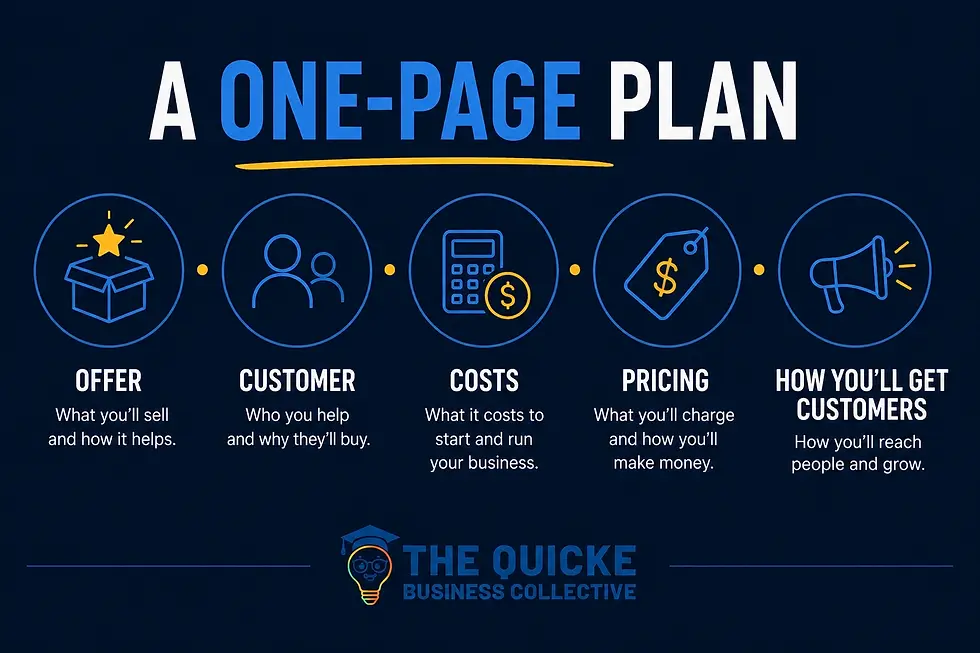
The SBA describes two formats: a traditional plan (detailed, often dozens of pages) and a lean startup plan (high-level, often a single page you can draft quickly). For most people starting a service or local business, the lean version is plenty — a page covering your offer, your customer, your costs, your pricing, and how you'll get customers. As the SBA puts it, "there's no right or wrong way to write a business plan. What's important is that your plan meets your needs."
When you DO need the full version
There's one situation where the detailed plan isn't optional: funding. If you'll approach a bank or investors, the SBA notes you'll typically need "a business plan, expense sheet, and financial projections for the next five years" so a lender can see you're a sound bet. No outside money on the horizon? You can keep it lean.
Why "just write a plan" trips people up
Knowing you should plan is easy. Turning a vague idea into clear numbers — a realistic price, honest startup costs, a specific customer, and a plan to reach them — is the part that actually protects your money, and it's where most first-timers get stuck. Working through those pieces for your specific business is the work, and it's exactly what the course helps you do.
Frequently asked questions
Can I start without any plan at all?
You can, but you're planning in your head either way — writing even a single page makes the gaps visible before they cost you. A rough plan beats a perfect one you never make.
How long should a first business plan be?
For most small businesses, one page is enough to start. Save the long, formal version for when a lender or investor asks for it.
What's the most important part of a plan?
The money math and the customer: whether real people want what you're offering and whether your price covers your costs with room left over. Everything else supports those two.
Do I need special software or a template?
No. A notebook or a blank document works. The value is in the thinking, not the format.
Want to build a plan that actually fits your business?
This article covered the what and the why. The Quicke Business Collective's Business Starter Program walks you through the how — turning your idea into a clear, simple plan you can act on, step by step.

Questions?
Email info@quickemarketing.com ·


Comments