_edited.png)
Does My Small Business Really Need a Website?
For most small businesses, yes — but maybe not the giant, expensive site you're picturing. A website earns its place by doing three things nothing else does as well: it's the one home base you fully own and control, it's how you show up when someone searches for what you offer, and it's where you build trust and convert interest into a sale or booking. Social media and a Google listing are important, but they're rented land — a website is the property you own. The real question isn't "website or not," it's "what's the smallest site that does the job for my business right now?"
Here's what a site does that other channels can't, and how to decide what you actually need.
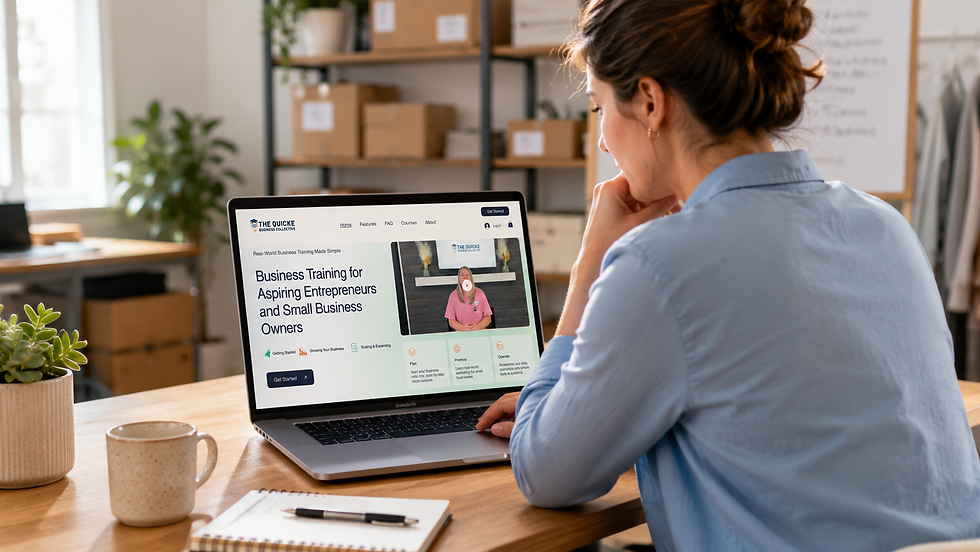
It's the home base you own
Social platforms change rules, algorithms, and reach whenever they want, and your account can be limited or lost through no fault of yours. Your website is the one place you fully control — your offer, your story, your way of collecting leads and payments. Everything else should point back to it.
It's how you get found on Google
When someone searches for what you do, a website is what can actually appear in the results. Google's own SEO Starter Guide explains how Google finds and understands pages and what helps you show up — helpful, well-organized content, clear titles, and a sensible structure. Without a site, you're relying entirely on other platforms to be findable. With one, you own a searchable presence that works around the clock.

It builds trust and turns interest into action
People check you out before they buy. A simple, clear site — what you offer, proof you're real (reviews, photos, credentials), and an easy way to contact or buy — answers the questions that turn a curious visitor into a customer. The SBA's marketing guidance ties this together: your website is where your marketing plan and customer experience meet, and where the sale often actually happens.
What you actually need (probably less than you think)
Most new businesses don't need a big custom site to start. A few clear pages — what you do, who it's for, proof, and a way to take the next step — will outperform an elaborate site that never gets finished. Start small and useful, then grow it as the business does.
Why "just build a website" is harder than it sounds
The trap isn't deciding to have a site — it's building one that's actually clear, findable, and set up to convert, instead of a pretty page that sits there. Knowing you need a site is the easy part. Structuring it so it gets found and turns visitors into customers is the work, and it's exactly what the course helps you do.
Frequently asked questions
Can't I just use social media instead?
Social media is great for reach, but it's rented — you don't control it, and it's weaker for being found in search or closing a sale. Most businesses want both, with the website as home base.
Do I need a website if I only sell locally?
Usually yes — even a small site plus a Google Business Profile helps local customers find you, check you out, and contact you. Local buyers still search online first.
How much should a first website cost?
Less than you fear. Simple, modern site builders let you launch a clean few-page site affordably. Clarity matters far more than a big budget.
What pages do I actually need to start?
A home page that states what you do and for whom, a way to contact or buy, and some proof (reviews, photos, or credentials). You can add more later.
Want a website that actually works, not just exists?
This article covered the what and the why. The Quicke Business Collective's Business Starter Program walks you through the how — deciding what your site needs and setting it up to get found and convert, step by step.

Questions?
Email info@quickemarketing.com ·


Comments