
How Do I Fact-Check Information Created by AI?
You fact-check AI the same way a good editor checks a confident intern: assume anything specific and checkable might be wrong until you confirm it. AI can state false facts, invent quotes, cite sources that don't exist, and get numbers, dates, laws, and prices wrong — all in a fluent, convincing voice. So the rule is simple: before you publish, send, or act on anything AI produced, verify the checkable claims against a reliable, independent source. The confidence of the answer tells you nothing about whether it's true.
Here's a practical way to catch AI's mistakes before they cost you.

Know what AI gets wrong
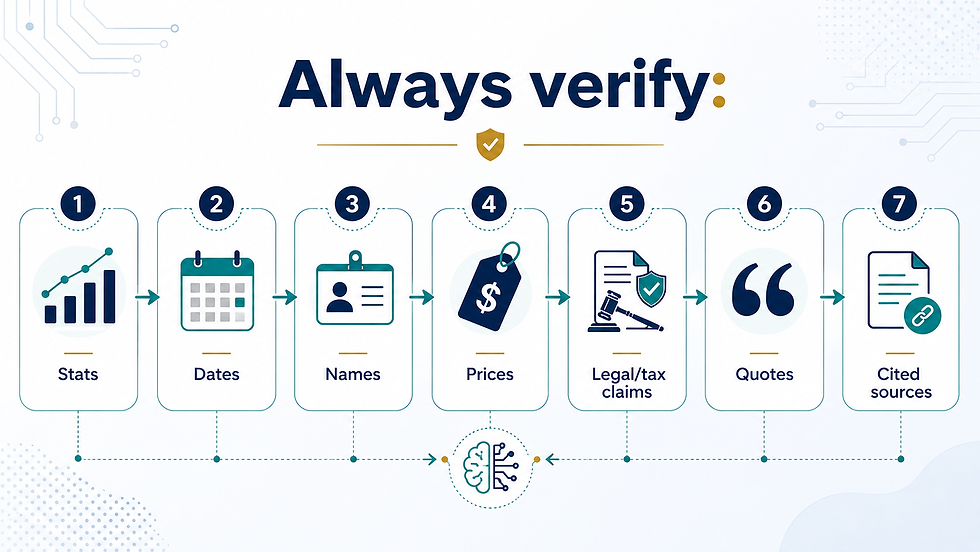
AI doesn't "know" facts the way you do — it predicts likely-sounding text, which means it can produce fluent, confident, and completely false statements (often called "hallucinations"). The riskiest outputs are specific claims: statistics, dates, names, legal or tax rules, prices, and quotes. General explanations are usually safe to trust as a starting point; precise facts are exactly what you must verify.
Verify the checkable claims against real sources
For anything specific, confirm it against an independent, reliable source — an official website, primary document, or reputable reference — not just another AI answer. Ask the AI where a claim comes from, then actually check that source exists and says what it claims. The FTC treats AI-assisted claims like any other: your business is responsible for making sure what you put out is truthful and substantiated, whether or not AI helped write it.
Build a human check into your workflow
Fact-checking works best as a habit, not an afterthought. Make "a human reviews before it goes out" a fixed step whenever AI output will be published or acted on. The NIST AI Risk Management Framework frames exactly this — human oversight and reliability built into how you use AI. One consistent review step catches most errors before they ever reach a customer.
Watch the high-stakes topics especially
Turn the caution up for anything with real consequences: legal, tax, financial, health, or safety information, and any public claim about your own products or results. In those areas, AI is a starting point to help you understand and prepare questions — never the final authority. When it truly matters, confirm with a qualified professional or an official source.
Why fact-checking AI is a real skill
Knowing you should verify is easy. Knowing which claims are risky, where to check them efficiently, and how to build that check into a busy workweek — without either trusting blindly or distrusting everything — is the actual skill. Developing that reliable habit for your business is exactly what the course helps you do.
Frequently asked questions
Does AI really make up facts?
Yes. It can produce confident, fluent statements that are simply wrong, including fake statistics, quotes, and citations. Always verify specific, checkable claims before relying on them.
How can I tell if an AI answer is accurate?
You often can't from the answer alone — it sounds sure either way. Check the specific claims against an independent, reliable source, and confirm any cited sources actually exist.
Is it enough to ask the AI if it's sure?
No. It may confidently confirm a wrong answer. Verification has to come from an outside, trustworthy source, not from the same tool that produced the claim.
What should I never take from AI without checking?
Anything legal, tax, financial, health, or safety related, plus any public claim about your business. Treat those as starting points and confirm them with a professional or official source.
This article is general information, not legal, tax, or professional advice. For decisions in those areas, consult a qualified professional.
Want to use AI without getting burned by bad information?
This article covered the what and the why. The Quicke Business Collective's Business Starter Program walks you through the how — building a simple, reliable way to check AI's work before you use it, step by step.

Questions?
Email info@quickemarketing.com ·


Comments