_edited.png)
How Do I Get My First Customers?
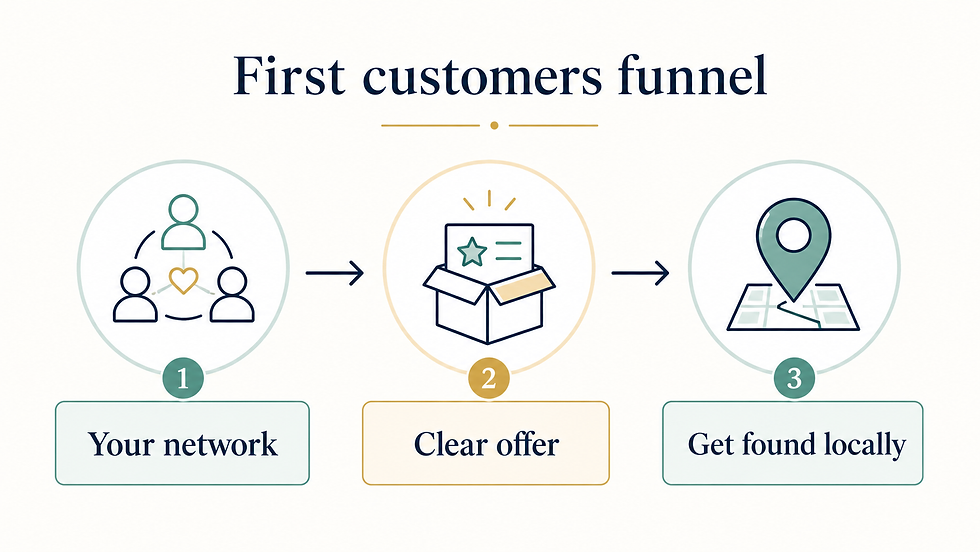
Your first customers almost always come from three places: the people who already know and trust you, a clear and specific offer you can explain in one sentence, and showing up where local customers are already looking — especially Google. You don't need a big ad budget or a huge following to start; you need to tell the right people exactly what you do and make it easy for them to say yes. The goal early on isn't scale, it's proof — a handful of real paying customers who tell you the business works.
Here's where to focus first, roughly in order of speed and cost.

Start with the people who already trust you
Your existing network — past clients, friends, former coworkers, local groups — is the fastest source of first customers because trust is already there. Tell them clearly what you now offer and who it's for, and ask them to refer people who need it. This feels less like "marketing" and more like letting people help you, which is exactly why it works.
Make your offer painfully clear
People don't buy what they don't understand. Before spending on ads, sharpen a one-sentence offer: what you do, who it's for, and the result. A solid marketing plan starts with knowing your audience in detail — the SBA's marketing guidance walks through describing your market's size, demographics, and needs so your message actually lands. A clear offer to the right people beats a clever ad to the wrong ones.
Get found where local customers look
For most local businesses, that means Google. Setting up a free Google Business Profile puts you on Google Search and Maps so nearby customers can find, call, and choose you. Google's official help explains how to add or claim your Business Profile — it's free and one of the highest-return hours a new local business can spend.
Keep your promises truthful
As you start promoting, remember that your claims are held to a standard: the FTC requires advertising to be truthful, not misleading, and backed by evidence. Beyond the rules, honest, specific claims convert better than hype — early customers are watching to see if you deliver what you said.
Why the first few are the hardest
Getting from zero to your first handful of customers is the steepest part of the climb — after that, referrals and repeat business compound. Knowing where to look is the easy part. Actually crafting the offer, doing the outreach without feeling pushy, and turning interest into paying customers is the work — and it's exactly what the course helps you do.
Frequently asked questions
How much should I spend to get my first customers?
Often very little. Your network, a clear offer, and a free Google Business Profile cost mostly time. Save paid ads for after you've proven people will buy.
How long does it take to get the first customer?
It varies, but a focused push to your network with a clear offer can produce customers quickly — sometimes within days. Vague effort takes far longer.
Should I discount to win early customers?
Be careful. A small, clear introductory offer can work, but deep discounts attract bargain-hunters and set a low anchor. Selling the value is usually better than cutting the price.
What if I'm shy about promoting myself?
Reframe it: you're not bragging, you're letting people who need help know you can provide it. Starting with warm contacts makes this far more comfortable.
Ready to land your first customers with confidence?
This article covered the what and the why. The Quicke Business Collective's Business Starter Program walks you through the how — crafting your offer, doing outreach, and turning interest into paying customers, step by step.

Questions?
Email info@quickemarketing.com ·


Comments