
What Business Expenses Can I Write Off on My Taxes?
You can generally write off expenses that are "ordinary and necessary" to run your business — costs that are common in your line of work and helpful for operating it. That covers things like supplies, software, advertising, business insurance, professional fees, mileage, part of a home office, and part of business meals. What you generally can't deduct are personal expenses. And a write-off isn't free money — it lowers the income you're taxed on, so good deductions shrink your tax bill by a fraction of what you spent.
Here's how to think about it without getting into trouble.

The "ordinary and necessary" rule
The IRS standard for a deductible business expense is that it's both ordinary (common and accepted in your field) and necessary (helpful and appropriate for your business). The IRS guidance on deducting business expenses walks through the main categories. Before you claim anything, apply the test: would others in your industry reasonably treat this as a business cost?
Common write-offs small businesses miss
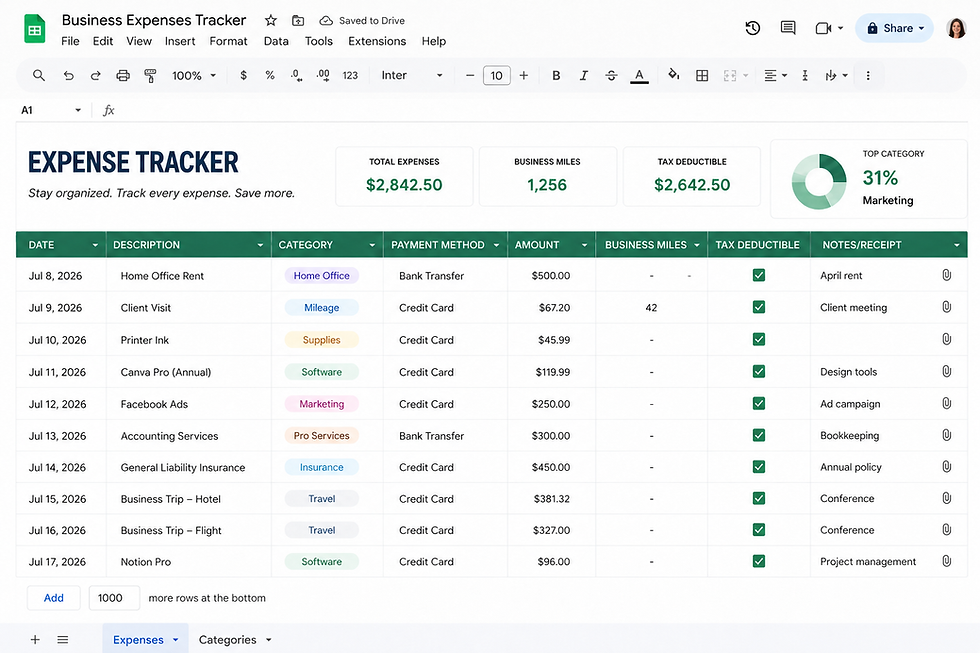
Beyond inventory and supplies, owners often overlook software subscriptions, professional development, bank and merchant fees, mileage, a home-office portion, and part of business meals. The SBA's overview of business taxes is a good reminder that your obligations — and the deductions that offset them — depend on your structure. Keep a record for everything; a deduction you can't document is one you can't safely claim.
Where owners get into trouble
The biggest mistakes are mixing personal and business spending, deducting 100% of things that are only partly business (a phone, a car, a meal), and claiming expenses with no records. Separate accounts and consistent bookkeeping make deductions defensible. When in doubt, a tax professional usually saves you more than they cost.
Where the how comes in
Knowing what's deductible is one thing; building a simple system that captures every expense, categorizes it correctly, and hands your accountant clean numbers at tax time is another. That practical setup is exactly what the Business Starter Program helps you put in place.
This article is general information, not tax advice. Tax rules change and depend on your situation — confirm specifics with the IRS or a qualified tax professional.
Frequently asked questions
Do write-offs mean the expense is free?
No. A deduction lowers your taxable income, so it reduces your tax by a fraction of the amount spent — it never fully pays you back.
Can I deduct a home office?
Often yes, if you use part of your home regularly and exclusively for business. The deduction is based on that space's share of your home.
Do I need receipts for everything?
Keep records for every deduction. Statements help, but itemized receipts are the safest proof if you're ever asked.
Are business meals deductible?
Many business meals are partly deductible when there's a clear business purpose. Note who you met and why, and keep the receipt.
Want to stop leaving money on the table at tax time?
This article covered the what and the why. The Quicke Business Collective's Business Starter Program walks you through the how — tracking expenses and organizing your finances so deductions are simple, step by step.

Questions?
Email info@quickemarketing.com ·


Comments